Showing posts with label folktale. Show all posts

Friday, December 20, 2013

The Pine Tree ....part One


The Pine Tree by Hans Christian Andersen
a story in Five parts.......part One

I. WHEN IT WAS LITTLE
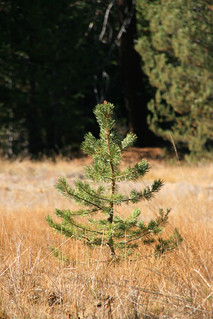
Out in the woods stood such a nice little Pine Tree: he had a good place; the sun could get at him; there was fresh air enough; and round him grew many big comrades, both pines and firs.

But the little Pine wanted so very much to be a grown-up tree.

He did not think of the warm sun and of the fresh air, he did not care for the little cottage-children who ran about and prattled when they were looking for wild strawberries and raspberries. Often they came with a whole jug full, or had their strawberries strung on a straw, and sat down near the little Tree and said, "Oh, what a nice little fellow!" This was what the Tree could not bear to hear.

The year after he had shot up a good deal, and the next year after he was still bigger; for with pine trees one can always tell by the shoots how many years old they are.

"Oh, were I but such a big tree as the others are," sighed the little Tree. "Then I could spread my branches so far, and with the tops look out into the wide world! Birds would build nests among my branches; and when there was a breeze, I could nod as grandly as the others there."

He had no delight at all in the sunshine, or in the birds, or the red clouds which morning and evening sailed above him.

When now it was winter and the snow all around lay glittering white, a hare would often come leaping along, and jump right over the little Tree. Oh, that made him so angry! But two winters went by, and with the third the Tree was so big that the hare had to go round it. "Oh, to grow, to grow, to become big and old, and be tall," thought the Tree: "that, after all, is the most delightful thing in the world!"

In autumn the wood-cutters always came and felled some of the largest trees. This happened every year, and the young Pine Tree, that was now quite well grown, trembled at the sight; for the great stately trees fell to the earth with noise and cracking, the branches were lopped off, and the trees looked quite bare, they were so long and thin; you would hardly know them for trees, and then they were laid on carts, and horses dragged them out of the wood.

Where did they go to? What became of them?

In spring, when the Swallow and the Stork came, the Tree asked them, "Don't you know where they have been taken? Have you not met them anywhere?"

The Swallow did not know anything about it; but the Stork looked doubtful, nodded his head, and said, "Yes; I have it; I met many new ships as I was flying from Egypt; on the ships were splendid masts, and I dare say it was they that smelt so of pine. I wish you joy, for they lifted themselves on high in fine style!"

"Oh, were I but old enough to fly across the sea! How does the sea really look? and what is it like?"

"Aye, that takes a long time to tell," said the Stork, and away he went.

"Rejoice in thy youth!" said the Sunbeams, "rejoice in thy hearty growth, and in the young life that is in thee!"

And the Wind kissed the Tree, and the Dew wept tears over him, but the Pine Tree understood it not.

*******part 2 tomorrow********

I plan to put up a part of this story each day followed by a different holiday/Christmas tree craft. There are soooo many crafts that I'm sure I'll run out of story first!


This simple Fingerprint Christmas Tree can be done by the youngest child. I found the idea at SassyDealz


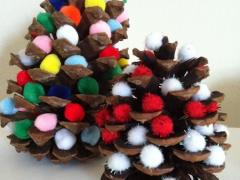
Using a Pine Cone as a tree is a very popular idea. I like all of the different decorations (painted snow tips, beads, stars etc) but I think my favorite is this very colorful one I found at KiwiCrate .com that uses pompoms found at the dollar store for ornaments.


Kids will love making this edible Christmas Tree made out of a waffle cone, frosting and candy. I found this craft at Make Life Delicious.

Monday, October 8, 2012

The Small-Tooth Dog....a folktale from England

Once upon a time there was a merchant who traveled about the world a great deal.
On one of his journeys thieves attacked him, and they would have taken both his life and his money if a large dog had not come to his rescue and driven the thieves away.

When the dog had driven the thieves away he took the merchant to his house, which was a very handsome one, and dressed his wounds and nursed him till he was well.
As soon as he was able to travel the merchant began his journey home, but before starting he told the dog how grateful he was for his kindness, and asked him what reward he could offer in return, and he said he would not refuse to give the most precious thing he had.

And so the merchant said to the dog, "Will you accept a fish I have that can speak twelve languages?"

"No," said the dog, "I will not."

"Or a goose that lays golden eggs?"

"No," said the dog, "I will not."

"Or a mirror in which you can see what anybody is thinking about?"

"No," said the dog, "I will not."

"Then what will you have?" said the merchant.

"I will have none of such presents," said the dog; "but let me fetch your daughter, and bring her to my house."

When the merchant heard this he was grieved, but what he had promised had to be done, so he said to the dog, "You can come and fetch my daughter after I have been home for a week."

So at the end of the week, the dog came to the merchant's house to fetch his daughter, but when he got there he stayed outside the door, and would not go in. But the merchant's daughter did as her father told her, and came out of the house dressed for a journey and ready to go with the dog.

When the dog saw her he looked pleased, and said, "Jump on my back, and I will take you away to my house."

So she mounted on the dog's back, and away they went at a great pace, until they reached the dog's house, which was many miles off. But after she had been a month at the dog's house she began to mope and cry.

"What are you crying for?" said the dog.

"Because I want to go back to my father," she said.

The dog said, "If you will promise me that you will not stay there more than three days I will take you there. But first of all," said he, "what do you call me?"

"A great, foul, small-tooth dog," said she.

"Then," said he, "I will not let you go."

But she cried so pitifully that he promised again to take her home.
"But before we start," he said, "tell me what you call me."

"Oh," she said, "your name is Sweet-as-a-Honeycomb."

"Jump on my back," said he, "and I'll take you home."

So he trotted away with her on his back for forty miles, when they came to a stile.
"And what do you call me?" said he, before they got over the stile. Thinking she was safe on her way, the girl said, "A great, foul, small-tooth dog."

But when she said this, he did not jump over the stile, but turned right round again at once, and galloped back to his own house with the girl on his back.

Another week went by, and again the girl wept so bitterly that the dog promised to take her to her father's house. So the girl got on the dog's back again, and they reached the first stile, as before, and the dog stopped and said, "And what do you call me?"

"Sweet-as-a-Honeycomb," she replied.

So the dog leaped over the stile, and they went on for twenty miles until they came to another stile.
"And what do you call me?" said the dog with a wag of his tail.

She was thinking more of her father and her own house than of the dog, so she answered, "A great, foul, small-tooth dog."

Then the dog was in a great rage, and he turned right round about, and galloped back to his own house as before.
After she had cried for another week, the dog promised again to take her back to her father's house. So she mounted upon his back once more, and when they got to the first stile, the dog said, "And what do you call me?"

"Sweet-as-a-Honeycomb," she said.

So the dog jumped over the stile, and away they went -- for now the girl made up her mind to say the most loving things she could think of -- until they reached her father's house.
When they got to the door of the merchant's house, the dog said, "And what do you call me?"


Just at that moment the girl forgot the loving things she meant to say and began, "A great --," but the dog began to turn, and she got fast hold of the door latch, and was going to say "foul," when she saw how grieved the dog looked and remembered how good and patient he had been with her, so she said, "Sweeter-than-a-Honeycomb."

When she had said this she thought the dog would have been content and have galloped away, but instead of that he suddenly stood upon his hind legs, and with his forelegs he pulled off his dog's head and tossed it high in the air.
His hairy coat dropped off, and there stood the handsomest young man in the world, with the finest and smallest teeth you ever saw.

Of course they were married, and lived together happily.

  This story can be found in  Household Tales and Other Traditional Remains: Collected in the Counties of York, Lincoln, Derby, and Nottingham written by Sidney Oldall Addy printed in 1895


***Small-Toothed Dog illustration found here


Honeycomb candy is an easy-to-make candy that has an interesting texture caused by carbon dioxide bubbles getting trapped within the candy. The carbon dioxide is produced when baking soda (sodium bicarbonate) is added to hot syrup. It is the same process used to make some baked goods rise, except here the bubbles are trapped to form a crisp candy. The holes in the candy make it light and give it a honeycomb appearance.
(information and recipe found at http://chemistry.about.com/od/foodscienceprojects/a/honeycombcandy.htm)

Honeycomb Candy Ingredients
  • 3/4 cup sugar
  • 2 tablespoons honey
  • 2 tablespoons water
  • 1-1/2 teaspoons baking soda
Honeycomb Candy Instructions
  1. Grease a cookie sheet. You can use oil, butter, or non-stick cooking spray.
  2. Add the sugar, honey, and water to a saucepan. You can stir the mixture, but it isn't necessary.
  3. Cook the ingredients over high heat, without stirring, until the mixture reaches 300°F. The sugar will melt, small bubbles will form, the bubbles will become larger, then the sugar will start to carmelize to an amber color.
  4. When the temperature reaches 300°F, remove the pan from heat and whisk the baking soda into the hot syrup. This will cause the syrup to foam up.
  5. Stir just enough to mix the ingredients, then dump the mixture onto the greased baking sheet. Don't spread out the candy, as this would pop your bubbles.
  6. Allow the candy to cool, then break or cut it into pieces.
  7. Store the honeycomb candy in an airtight container.

Great step by step pictures can be found at http://swirlandscramble.blogspot.com/2008/10/honeycomb-candy.html


 How to make a Honeycomb Wax Candle


How to cut Honeycomb Beeswax sheets for Candlemaking

Saturday, June 16, 2012

The Bremen Town Musicians.... a tale from Germany

Bremen Town Musicians block cut by Walter Crane

A man had a donkey, who for long years had untiringly carried sacks to the mill, but whose strength was now failing, so that he was becoming less and less able to work. Then his master thought that he would no longer feed him, but the donkey noticed that it was not a good wind that was blowing and ran away, setting forth on the road to Bremen, where he thought he could become a town musician. When he had gone a little way he found a hunting dog lying in the road, who was panting like one who had run himself tired.

"Why are you panting so, Grab-Hold?" asked the donkey.

"Oh," said the dog, "because I am old and am getting weaker every day and can no longer go hunting, my master wanted to kill me, so I ran off; but now how should I earn my bread?"

"Do you know what," said the donkey, "I am going to Bremen and am going to become a town musician there. Come along and take up music too. I'll play the lute, and you can beat the drums."

The dog was satisfied with that, and they went further. It didn't take long, before they came to a cat sitting by the side of the road and making a face like three days of rainy weather. "What has crossed you, old Beard-Licker?" said the donkey.

"Oh," answered the cat, "who can be cheerful when his neck is at risk? I am getting on in years, and my teeth are getting dull, so I would rather sit behind the stove and purr than to chase around after mice. Therefore my mistress wanted to drown me, but I took off. Now good advice is scarce. Where should I go?"

"Come with us to Bremen. After all, you understand night music. You can become a town musician there." The cat agreed and went along.

Then the three refugees came to a farmyard, and the rooster of the house was sitting on the gate crying with all his might.

"Your cries pierce one's marrow and bone," said the donkey. "What are you up to?"

"I just prophesied good weather," said the rooster, "because it is Our Dear Lady's Day, when she washes the Christ Child's shirts and wants to dry them; but because Sunday guests are coming tomorrow, the lady of the house has no mercy and told the cook that she wants to eat me tomorrow in the soup, so I am supposed to let them cut off my head this evening. Now I am going to cry at the top of my voice as long as I can."

"Hey now, Red-Head," said the donkey, "instead come away with us. We're going to Bremen. You can always find something better than death. You have a good voice, and when we make music together, it will be very pleasing."

The rooster was happy with the proposal, and all four went off together. However, they could not reach the city of Bremen in one day, and in the evening they came into a forest, where they would spend the night. The donkey and the dog lay down under a big tree, but the cat and the rooster took to the branches. The rooster flew right to the top, where it was safest for him. Before falling asleep he looked around once again in all four directions, and he thought that he saw a little spark burning in the distance. He hollered to his companions, that there must be a house not too far away, for a light was shining.

The donkey said, "Then we must get up and go there, because the lodging here is poor." The dog said that he could do well with a few bones with a little meat on them. Thus they set forth toward the place where the light was, and they soon saw it glistening more brightly, and it became larger and larger, until they came to the front of a brightly lit robbers' house.

The donkey, the largest of them, approached the window and looked in.

"What do you see, Gray-Horse?" asked the rooster.

"What do I see?" answered the donkey. "A table set with good things to eat and drink, and robbers sitting there enjoying themselves."

"That would be something for us," said the rooster.

"Ee-ah, ee-ah, oh, if we were there!" said the donkey.

Then the animals discussed how they might drive the robbers away, and at last they came upon a plan. The donkey was to stand with his front feet on the window, the dog to jump on the donkey's back, the cat to climb onto the dog, and finally the rooster would fly up and sit on the cat's head. When they had done that, at a signal they began to make their music all together. The donkey brayed, the dog barked, the cat meowed and the rooster crowed. Then they crashed through the window into the room, shattering the panes.
The robbers jumped up at the terrible bellowing, thinking that a ghost was coming in, and fled in great fear out into the woods. Then the four companions seated themselves at the table and freely partook of the leftovers, eating as if they would get nothing more for four weeks.

When the four minstrels were finished, they put out the light and looked for a place to sleep, each according to his nature and his desire. The donkey lay down on the manure pile, the dog behind the door, the cat on the hearth next to the warm ashes, and the rooster sat on the beam of the roof. Because they were tired from their long journey, they soon fell asleep.

When midnight had passed and the robbers saw from the distance that the light was no longer burning in the house, and everything appeared to be quiet, the captain said, "We shouldn't have let ourselves be chased off," and he told one of them to go back and investigate the house. The one they sent found everything still, and went into the kitchen to strike a light. He mistook the cat's glowing, fiery eyes for live coals, and held a sulfur match next to them, so that it would catch fire. But the cat didn't think this was funny and jumped into his face, spitting, and scratching.

He was terribly frightened and ran toward the back door, but the dog, who was lying there, jumped up and bit him in the leg. When he ran across the yard past the manure pile, the donkey gave him a healthy blow with his hind foot, and the rooster, who had been awakened from his sleep by the noise and was now alert, cried down from the beam, "Cock-a-doodle-doo!"

Then the robber ran as fast as he could back to his captain and said, "Oh, there is a horrible witch sitting in the house, she blew at me and scratched my face with her long fingers. And there is a man with a knife standing in front of the door, and he stabbed me in the leg. And a black monster is lying in the yard, and it struck at me with a wooden club. And the judge is sitting up there on the roof, and he was calling out, 'Bring the rascal here.' Then I did what I could to get away."

From that time forth, the robbers did not dare go back into the house. However, the four Bremen Musicians liked it so well there, that they never left it again. And the person who just told that, his mouth is still warm.

story by Jacob and Wilhelm Grimm in Children's and Household Tales -- Grimms' Fairy Tales published in 1857       online source for story is here


Become a Musician!
Making your own instruments can be fun and very simple. One of the easiest instruments to make is a kazoo.

A Kazoo is defined as
"a musical instrument with a membrane that produces a buzzing sound when a player hums or sings into the mouthpiece."
Wiki goes on to say:
The kazoo is a wind instrument which adds a "buzzing" timbral quality to a player's voice when the player vocalizes into it. The kazoo is a type of militron, which is a membranophone – a device which modifies the sound of a person's voice by way of a vibrating membrane.
"Kazoo" was the name given by Warren Herbert Frost to his invention in Patent #270,543 issued on January 9, 1883. In the text of the patent he refers to it as "This instrument or toy, to which I propose to give the name 'kazoo' ".
The simplest and fastest kazoo to make is a Comb Kazoo.

 You'll need:
*An ordinary old fashioned plastic comb ( small fine toothed pocket combs work best, you can get a bag full at a dollar story)
*Wax Paper
*Scissors

1) Cut a piece of wax paper that is slightly smaller than the length of the comb and twice the size of the combs height.
2)  Fold the wax paper in half length wise
3) Place the comb inside the folded paper with the teeth in the folded seam.


You're now ready to "play" your kazoo.
Hold the paper over the teeth of the comb and put the comb against your lips. 
Then, keeping your lips open a little, hum a tune into the comb. 
You'll need to experiment to see what gives you the best sound.


Here's the link to a youtube video, that for some reason I can't embed, that shows How to Make a Kazoo using a Toilet Paper Roll


 This link is to the Kazoologist where they give lots of scientific information on kazoos and militrons.
http://kazoologist.org/Experiments.html


Before leaving, I want you to remember the most important rule of kazoo playing:

Monday, August 9, 2010

Sweet-as-a-Honeycomb....a folktale from England

 (After you finish this story, ask the children what popular fairy tale it reminds them of.)

Once upon a time there was a merchant who traveled about the world a great deal. On one of his journeys thieves attacked him, and they would have taken both his life and his money if a large dog had not come to his rescue and driven the thieves away.

When the dog had driven the thieves away he took the merchant to his house, which was a very handsome one, and dressed his wounds and nursed him till he was well.

As soon as he was able to travel the merchant began his journey home, but before starting he told the dog how grateful he was for his kindness, and asked him what reward he could offer in return, and he said he would not refuse to give the most precious thing he had.

And so the merchant said to the dog, "Will you accept a fish I have that can speak twelve languages?"

"No," said the dog, "I will not."

"Or a goose that lays golden eggs?"

"No," said the dog, "I will not."

"Or a mirror in which you can see what anybody is thinking about?"

"No," said the dog, "I will not."

"Then what will you have?" said the merchant.

"I will have none of such presents," said the dog; "but let me fetch your daughter, and bring her to my house."

When the merchant heard this he was grieved, but what he had promised had to be done, so he said to the dog, "You can come and fetch my daughter after I have been home for a week."

So at the end of the week, the dog came to the merchant's house to fetch his daughter, but when he got there he stayed outside the door, and would not go in.
But the merchant's daughter did as her father told her, and came out of the house dressed for a journey and ready to go with the dog.
When the dog saw her he looked pleased, and said, "Jump on my back, and I will take you away to my house."
So she mounted on the dog's back, and away they went at a great pace, until they reached the dog's house, which was many miles off.

But after she had been a month at the dog's house she began to mope and cry.
"What are you crying for?" said the dog.

"Because I want to go back to my father," she said.

The dog said, "If you will promise me that you will not stay there more than three days I will take you there. But first of all," said he, "what do you call me?"

"A great, foul, small-tooth dog," said she.

"Then," said he, "I will not let you go."

But she cried so pitifully that he promised again to take her home.
"But before we start," he said, "tell me what you call me."

"Oh," she said, "your name is Sweet-as-a-Honeycomb."

"Jump on my back," said he, "and I'll take you home."

So he trotted away with her on his back for forty miles, when they came to a stile.
"And what do you call me?" said he, before they got over the stile.
Thinking she was safe on her way, the girl said, "A great, foul, small-tooth dog."

But when she said this, he did not jump over the stile, but turned right round again at once, and galloped back to his own house with the girl on his back.
Another week went by, and again the girl wept so bitterly that the dog promised to take her to her father's house.

So the girl got on the dog's back again, and they reached the first stile, as before, and the dog stopped and said, "And what do you call me?"

"Sweet-as-a-Honeycomb," she replied.

So the dog leaped over the stile, and they went on for twenty miles until they came to another stile.
"And what do you call me?" said the dog with a wag of his tail.

She was thinking more of her father and her own house than of the dog, so she answered, "A great, foul, small-tooth dog."

Then the dog was in a great rage, and he turned right round about, and galloped back to his own house as before.
After she had cried for another week, the dog promised again to take her back to her father's house. So she mounted upon his back once more, and when they got to the first stile, the dog said, "And what do you call me?"

"Sweet-as-a-Honeycomb," she said.

So the dog jumped over the stile, and away they went -- for now the girl made up her mind to say the most loving things she could think of -- until they reached her father's house.

When they got to the door of the merchant's house, the dog said, "And what do you call me?"

Just at that moment the girl forgot the loving things she meant to say and began, "A great --," but the dog began to turn, and she got fast hold of the door latch, and was going to say "foul," when she saw how grieved the dog looked and remembered how good and patient he had been with her, so she said, "Sweeter-than-a-Honeycomb."

When she had said this she thought the dog would have been content and have galloped away, but instead of that he suddenly stood upon his hind legs, and with his forelegs he pulled off his dog's head and tossed it high in the air. His hairy coat dropped off, and there stood the handsomest young man in the world, with the finest and smallest teeth you ever saw.

Of course they were married, and lived together happily.

(Story collected by Sidney Oldall Addy for Household Tales and Other Traditional Remains: Collected in the Counties of York, Lincoln, Derby and Nottingham published in 1895)

Did you recognize the story? Yep, it's very similar to the classic Beauty and the Beast.

I've found 2 and a half fun dog crafts for you. I say two and a half because the last craft is just a variation of the first craft. The first two crafts are very simple and suitable for children of all ages. The last craft requires more skill and patience.

 Directions on how to make a very simple Origami Dog

Great directions on how to make a poodle, a chihuahua and a dachshund from chenille stems and pompoms 

The dog made here is the same Origami Dog made in the first directions link.


For the older child and the more experienced Origamist (is that a word?), try making an Origami Dog out of a Dollar Bill.


Thursday, July 1, 2010

The Last Darning Needle....an Oregon Folktale (retold by S.E. Schlosser) for Thread the Needle Day


Folks traveling the Oregon Trail looking for a new life left almost everything behind them when they made the 2000 mile journey in their covered wagons.  As the trail grew harder, the valleys steeper, the mountains more treacherous, they started abandoning furniture and luxuries of all sorts by the wayside to make it easier to move the wagons.  Many of their horses and cattle died on the trail.  And many lost family members to sickness or accident.

By the time the settlers reached Oregon, the few goods they had were precious indeed.  And so it was for the people who made their new home in Pass Creek Canyon.  The tiny settlement was so isolated that the villagers had no access to manufactured goods of any sort and had to make do with what they brought with them.  And so, it turned out, they were soon down to their very last darning needle.

Now darning needles, in those days, were used to sew clothing and darn socks and mend buttons that were torn off.  For a whole community to have only one darning needle was a major concern.  The settlers were very careful to keep the needle safe.  They passed it from family to family, and for two or three days at a time, the women in each family would sew and darn as quickly as they could before passing the needle on to the next household.

Then one day, little Jimmy Chitwood was assigned the task of carrying the needle to Grandmother Drain's cottage over the hillside.  To keep the darning needle safe, his mother threaded it with bright red wool knotted firmly through the eye of the needle.  Then she stuck it into a potato and gave the precious needle to her small son.

As the little boy walked along the trail, he heard a rustling in the bushes.  Ahead of him, a Mama bear and her two cubs ambled into view.  Alarmed, Jimmy ducked behind a serviceberry bush, hoping the Mama bear wouldn't notice him and attack.  He sat very still, trembling from head to toe, until all sounds of the bears had ceased.  Then he crept back out onto the trail, checked carefully in both directions, and continued toward Grandmother Drain's cabin.  And that's when he realized his hand was empty!  He'd lost the potato with the precious darning needle stuck into it.

Little Jimmy looked everywhere, but there were many serviceberry bushes, and he couldn't find the exact place where he'd left the trail.  Soon the whole village turned out to look for the potato with the darning needle stuck into it.  They combed the hillside for hours, and it was the despairing little Jimmy who finally caught a glimpse of red wool in the bracken and swooped inside to rescue the darning needle.

But all good things come to an end.  With so much heavy use and so much time spent stuck into the juice of the potato, the needle grew weak and it broke in Grandmother Drain's hand the day after it was found in the woods.  The whole village was upset by the loss, but no one blamed Grandmother Drain for breaking it.  It could have happened to any of them.  But all sewing and mending in the village ceased from that day, and clothing grew tattered, socks and stockings had gaping holes in them, and folks shook their heads, wondering what to do.

Little Jimmy Chitwood blamed himself bitterly for the loss of the darning needle.  If only he hadn't lost it.  If it hadn't been stuck so long in the potato, it might not have broken in Grandmother Drain's hand.  He fretted and fretted about the lost darning needle, and nothing his parents said could comfort him.

At that time, a young man in California decided he wanted a life of adventure.  He came north to Portland Oregon, set himself up with a mule and wagon full of goods, and started roaming the mountains and valleys, visiting villages and mining camps and farming communities.  It so happened that a month to the day after the breaking of the last darning needle, he wandered into Pass Creek Canyon with his peddler's wagon.

News of the peddler spread like wildfire through the community, and soon the young man was surrounded by families fingering his wares and talking excitedly.  The young man soon learned about the last darning needle from Mrs. Chitwood, and he watched little Jimmy stroking the horse's mane and pretending not to listen as he mother talked of losing the needle when the bear appeared, and finding it again, and then losing it again when it broke.

"Well, son," the young peddler said to Jimmy.  "Do you intend to give your family and friends Christmas gifts this year?"

Jimmy looked up from patting the mule, startled by the question.  He hadn't thought about Christmas until that moment.  He nodded uncertainly.

"Well, son.  How about you and I give everyone their Christmas presents a little early."  He knelt down beside the lad and took a small packet out of the pocket of his coat.  "Why don't you give one of these to each of the ladies in your town as an early Christmas gift?"  And he handed the child the packet full of darning needles.  "I think there are enough here for every family to have one."

And so there were.  Little Jimmy passed the needles out to each family, his face beaming with pride.  And the peddler refused to accept a penny for the needles, insisting that they were a Christmas gift from Jimmy to the town.

After that, Pass Creek Canyon became a regular stop on the peddler's route, and the farmers and settlers in the community began to prosper and do well in their new home.  Never again did they run out of darning needles, which was a blessing to all!

 July 25th is Thread the Needle Day. A day to celebrate sewing crafts of every kind. Naturally, I plan to give you a sewing craft to go with the story and the holiday but there is also an old children's game called  Thread the Needle.

According to MamaLisa.com:
In Thread the Needle Games, the players stand in two rows across from each other. They hold hands in an arch with the person across from them. Players go under the arch and join the end of the line once they’re through the arch. Sometimes they’re played while singing a song.
 It sounds a lot like playing London Bridge, doesn't it?
Like most folk songs and folk games, there are variations on how the game is played and on the words and tune of the song.

midi version of the tune
Thread my grandmother’s needle,
Thread my grandmother’s needle;
It is too dark we cannot see
To thread my grandmother’s needle.

Come thread a long needle, come thread,
The eye is too little, the needle’s too big.
Thread the needle thro’ the skin,
Sometimes out and sometimes in.

This is an interesting video of adults playing the game.


And now for a very easy sewing project.

T Shirt Drawstring Bag
you'll need:
a t-shirt
needle and thread
scissors
ribbon or cord for a drawstring
safety pin

Directions:
Turn the t-shirt inside out.
Cut t-shirt starting next to the collar and cut straight down both sides.
Sew down both sides and across the bottom.
Turn right sides out.
To close you bag, will use the natural neck casing as your drawstring casing. Cut small slit in this collar casing.
 Pin safety pin to one end of your ribbon or cord.
Insert drawstring or ribbon through the neck casing. 
Remove pin, tie the ends of your ribbon together.
Voila!
Check out these step-by-step pics.

Craft Blog has a similar bag from a t-shirt. The directions have good pictures.

How to Hand Sew

Wednesday, March 31, 2010

Two Frogs....a story from Japan for Frog Month (April)


The Two Frogs
Once upon a time in the country of Japan there lived two frogs, one of whom made his home in a ditch near the town of Osaka, on the sea coast, while the other dwelt in a clear little stream which ran through the city of Kyoto. At such a great distance apart, they had never even heard of each other; but, funnily enough, the idea came into both their heads at once that they should like to see a little of the world, and the frog who lived at Kyoto wanted to visit Osaka, and the frog who lived at Osaka wished to go to Kyoto, where the great Mikado had his palace.

So one fine morning in the spring they both set out along the road that led from Kyoto to Osaka, one from one end and the other from the other. The journey was more tiring than they expected, for they did not know much about traveling, and halfway between the two towns there arose a mountain which had to be climbed. It took them a long time and a great many hops to reach the top, but there they were at last, and what was the surprise of each to see another frog before him!

They looked at each other for a moment without speaking, and then fell into conversation, explaining the cause of their meeting so far from their homes. It was delightful to find that they both felt the same wish--to learn a little more of their native country--and as there was no sort of hurry they stretched themselves out in a cool, damp place, and agreed that they would have a good rest before they parted to go their ways.

"What a pity we are not bigger," said the Osaka frog; "for then we could see both towns from here, and tell if it is worth our while going on."

"Oh, that is easily managed," returned the Kyoto frog. "We have only got to stand up on our hind legs, and hold onto each other, and then we can each look at the town he is traveling to."

This idea pleased the Osaka frog so much that he at once jumped up and put his front paws on the shoulder of his friend, who had risen also. There they both stood, stretching themselves as high as they could, and holding each other tightly, so that they might not fall down. The Kyoto frog turned his nose towards Osaka, and the Osaka frog turned his nose towards Kyoto; but the foolish things forgot that when they stood up their great eyes lay in the backs of their heads, and that though their noses might point to the places to which they wanted to go, their eyes beheld the places from which they had come.

"Dear me!" cried the Osaka frog, "Kyoto is exactly like Osaka. It is certainly not worth such a long journey. I shall go home!"

"If I had had any idea that Osaka was only a copy of Kyoto I should never have traveled all this way," exclaimed the frog from Kyoto, and as he spoke he took his hands from his friend's shoulders, and they both fell down on the grass. Then they took a polite farewell of each other, and set off for home again, and to the end of their lives they believed that Osaka and Kyoto, which are as different to look at as two towns can be, were as alike as two peas.

* Source: Andrew Lang, The Violet Fairy Book (London: Longmans, Green and Co., 1901), pp. 125-126.


How to Make an Origami Jumping Frog

Origami (折り紙?, from ori meaning "folding", and kami meaning "paper") is the traditional Japanese folk art of paper folding, which started in the 17th century AD and was popularized in the mid-1900s. It has since then evolved into a modern art form. The goal of this art is to transform a flat sheet of material into a finished sculpture through folding and sculpting techniques, and as such the use of cuts or glue are not considered to be origami.

this info found at wikipedia

I love these little frogs. I find the best way to learn origami is visually. So I have given you the chart below, a link and a wonderful video.


pic from papercrane.org


Very good step by step pictures on How to make an Origami Jumping Frog


Wednesday, March 3, 2010

Rumpelstiltskin......a German tale retold by the Brothers Grimm


Once upon a time there was a miller who was poor, but who had a beautiful daughter. Now it happened that he got into a conversation with the king, and to make an impression on him he said, "I have a daughter who can spin straw into gold."

The king said to the miller, "That is an art that I really like. If your daughter is as skillful as you say, then bring her to my castle tomorrow, and I will put her to the test."

When the girl was brought to him he led her into a room that was entirely filled with straw. Giving her a spinning wheel and a reel, he said, "Get to work now. Spin all night, and if by morning you have not spun this straw into gold, then you will have to die." Then he himself locked the room, and she was there all alone.

The poor miller's daughter sat there, and for her life she did not know what to do. She had no idea how to spin straw into gold. She became more and more afraid, and finally began to cry.

Then suddenly the door opened. A little man stepped inside and said, "Good evening, Mistress Miller, why are you crying so?"

"Oh," answered the girl, "I am supposed to spin straw into gold, and I do not know how to do it."

The little man said, "What will you give me if I spin it for you?"

"My necklace," said the girl.

The little man took the necklace, sat down before the spinning wheel, and whir, whir, whir, three times pulled, and the spool was full. Then he put another one on, and whir, whir, whir, three times pulled, and the second one was full as well. So it went until morning, and then all the straw was spun, and all the spools were filled with gold.

At sunrise the king came, and when he saw the gold he was surprised and happy, but his heart became even more greedy for gold. He had the miller's daughter taken to another room filled with straw. It was even larger, and he ordered her to spin it in one night, if she valued her life.

The girl did not know what to do, and she cried. Once again the door opened, and the little man appeared. He said, "What will you give me if I spin the straw into gold for you?"

"The ring from my finger," answered the girl.

The little man took the ring, and began once again to whir with the spinning wheel. By morning he had spun all the straw into glistening gold. The king was happy beyond measure when he saw it, but he still did not have his fill of gold. He had the miller's daughter taken to a still larger room filled with straw, and said, "Tonight you must spin this too. If you succeed you shall become my wife." He thought, "Even if she is only a miller's daughter, I will not find a richer wife in all the world."

When the girl was alone the little man returned for a third time. He said, "What will you give me if I spin the straw this time?"

"I have nothing more that I could give you," answered the girl.

"Then promise me, after you are queen, your first child."

"Who knows what will happen," thought the miller's daughter, and not knowing what else to do, she promised the little man what he demanded. In return the little man once again spun the straw into gold.

When in the morning the king came and found everything just as he desired, he married her, and the beautiful miller's daughter became queen.

A year later she brought a beautiful child to the world. She thought no more about the little man, but suddenly he appeared in her room and said, "Now give me that which you promised."

The queen took fright and offered the little man all the wealth of the kingdom if he would let her keep the child, but the little man said, "No. Something living is dearer to me than all the treasures of the world."

Then the queen began lamenting and crying so much that the little man took pity on her and said, "I will give you three days' time. If by then you know my name, then you shall keep your child."

The queen spent the entire night thinking of all the names she had ever heard. Then she sent a messenger into the country to inquire far and wide what other names there were. When the little man returned the next day she began with Kaspar, Melchior, Balzer, and said in order all the names she knew. After each one the little man said, "That is not my name."

The second day she sent inquiries into the neighborhood as to what names people had. She recited the most unusual and most curious names to the little man: "Is your name perhaps Beastrib? Or Muttoncalf? Or Legstring?"

But he always answered, "That is not my name."

On the third day the messenger returned and said, "I have not been able to find a single new name, but when I was approaching a high mountain in the corner of the woods, there where the fox and the hare say good-night, I saw a little house. A fire was burning in front of the house, and an altogether comical little man was jumping around the fire, hopping on one leg and calling out:

Today I'll bake; tomorrow I'll brew,
Then I'll fetch the queen's new child,
It is good that no one knows,
Rumpelstiltskin is my name.

You can imagine how happy the queen was when she heard that name. Soon afterward the little man came in and asked, "Now, Madame Queen, what is my name?"

She first asked, "Is your name Kunz?"

"No."

"Is your name Heinz?"

"No."

"Is your name perhaps Rumpelstiltskin?"

"The devil told you that! The devil told you that!" shouted the little man, and with anger he stomped his right foot so hard into the ground that he fell in up to his waist. Then with both hands he took hold of his left foot and ripped himself up the middle in two.

* Story Source: Jacob and Wilhelm Grimm, Rumpelstilzchen, Kinder- und Hausmärchen (Children's and Household Tales -- Grimms' Fairy Tales), final edition (Berlin, 1857), no. 55.

March 7th through 13th, 2010 is Celebrate Your Name Week, the perfect time to read a story or books about names and to do name related crafts.
Check out my list of Picture Books about Names

Mirror Name Art
here's a good example
You'll need:
Paper
Crayons
Markers
Ruler

How to:
1. Fold a sheet of paper in half the long way and turn the paper so that the fold runs from left to right.
2. Write your name across the top half of the paper. Press down hard with the crayon as you color in your name.
3. Fold the paper in half again along the same fold but in the other direction so the name is covered.
4. Rub along the folded side with the side of a pencil, marker or ruler.
5. Open the paper to see your name written backwards on the other side of the fold.
6. Turn the paper so the fold runs top to bottom.
7. Using markers or crayons, make a picture out the design your name created!

Tuesday, February 9, 2010

The Three Goslings......a tale from Italy


Once upon a time there were three goslings who were greatly afraid of the wolf, for if he found them he would eat them. One day the largest said to the other two, "Do you know what I think? I think we had better build a little house, so that the wolf shall not eat us, and meanwhile let us go and look for something to build the house with."

Then the other two said, "Yes, yes, yes! Good! Let us go!"

So they went and found a man who had a load of straw and said to him, "Good man, do us the favor to give us a little of that straw to make a house of, so that the wolf shall not eat us."

The man said, "Take it, take it!" And he gave them as much as they wanted.

The goslings thanked the man and took the straw and went away to a meadow, and there they built a lovely little house, with a door, and balconies, and kitchen, with everything, in short.

When it was finished, the largest gosling said, "Now I want to see whether one is comfortable in this house." So she went in and said, "Oh! How comfortable it is in the house! Just wait!" She went and locked the door with a padlock, and went out on the balcony and said to the other two goslings, "I am very comfortable alone here. Go away, for I want nothing to do with you."

The two poor little goslings began to cry and beg their sister to open the door and let them in. If she did not, the wolf would eat them. But she would not listen to them. Then the two goslings went away and found a man who had a load of hay. They said to him, "Good man, do us the kindness to give us a little of that hay to build a house with, so that the wolf shall not eat us!"

"Yes, yes, yes! Take some, take some!" And he gave them as much as they wanted.

The goslings, well pleased, thanked the man and carried the hay to a meadow and built a very pretty little house, prettier than the other. The middle-sized gosling said the smallest, "Listen. I am going now to see whether one is comfortable in this house. But I will not act like our sister, you know!"

She entered the house and said to herself, "Oh! How comfortable it is here! I don't want my sister! I am very comfortable here alone." So she went and fastened the door with a padlock, and went out on the balcony and said to her sister, "Oh! How comfortable it is in this house! I don't want you here! Go away, go away!"

The gosling began to weep and beg her sister to open to her, for she was alone, and did not know where to go, and if the wolf found her he would eat her. But it did no good. She shut the balcony and stayed in the house.

Then the gosling, full of fear, went away and found a man who had a load of iron and stones and said to him, "Good man, do me the favor to give me a few of those stones and a little of that iron to build me a house with, so that the wolf shall not eat me!"

The man pitied the gosling so much that he said, "Yes, yes, good gosling, or rather I will build your house for you."

Then they went away to a meadow, and the man built a very pretty house, with a garden and everything necessary, and very strong, for it was lined with iron, and the balcony and door of iron also. The gosling, well pleased, thanked the man and went into the house and remained there.

Now let us go to the wolf.

The wolf looked everywhere for these goslings, but could not find them. After a time he learned that they had built three houses. "Good, good! he said. "Wait until I find you!" Then he started out and journeyed and journeyed until he came to the meadow where the first house was. He knocked at the door, and the gosling said, "Who is knocking at the door?"

"Come, come," said the wolf. "Open up, for it is I."

"The gosling said, "I will not open for you, because you will eat me."

"Open, open! I will not eat you. Be not afraid. Very well, " said the wolf, "if you will not open the door, I will blow down your house." And indeed, he did blow down the house and ate up the gosling.

"Now that I have eaten one," he said, "I will eat the others too." Then he went away and came at last to the house of the second gosling, and everything happened as to the first. The wolf blew down the house and ate the gosling.

Then he went in search of the third, and when he found her he knocked at the door, but she would not let him in. Then he tried to blow the house down, but could not. Then he climbed on the roof and tried to trample the house down, but in vain. "Very well," he said to himself. "In one way or another I will eat you." Then he came down from the roof and said to the gosling, "Listen, gosling. Do you wish us to make peace? I don't want to quarrel with you who are so good, and I have thought that tomorrow we will cook some macaroni, and I will bring the butter and cheese, and you will furnish the flour."

"Very good," said the gosling. "Bring them then."

The wolf, well satisfied, saluted the gosling and went away. The next day the gosling got up early and went and bought the meal and then returned home and shut the house. A little later the wolf came and knocked at the door and said, "Come, gosling, open the door, for I have brought you the butter and cheese!"

"Very well, give it to me here by the balcony."

"No indeed, open the door!"

"I will open when all is ready."

Then the wolf gave her the things by the balcony and went away. While he was gone the gosling prepared the macaroni, and put it on the fire to cook in a kettle full of water. When it was two o'clock the wolf came and said, "Come, gosling, open the door."

"No, I will not open, for when I am busy I don't want anyone in the way. When it is cooked, I will open, and you may come in and eat it."

A little while after, the gosling said to the wolf, "Would you like to try a bit of macaroni to see whether it is well cooked?"

"Open the door! That is the better way."

"No, no. Don't think you are coming in. Put your mouth to the hole in the shelf, and I will pour the macaroni down."

The wolf, all greedy as he was, put his mouth to the hole, and then the gosling took the kettle of boiling water and poured the boiling water instead of the macaroni through the hole into the wolf's mouth. And the wolf was scalded and killed.

Then the gosling took a knife and cut open the wolf's stomach, and out jumped the other goslings, who were still alive, for the wolf was so greedy that he had swallowed them whole. Then there goslings begged their sister's pardon for the mean way in which they had treated her, and she, because she was kindhearted, forgave them and took them into her house, and there they ate their macaroni and lived together happy and contented.

Source: Thomas Frederick Crane, Italian Popular Tales (London: Macmillan and Company, 1885)


This story, which you'll have noticed is very similar to the 3 Little Pigs story, is lots of fun to do with puppets.
It's easy to make stick puppets for the characters and houses out of milk cartons.
You can use the pictures above for your puppets or draw your own.

You'll need :
Construction or scrap paper for the puppets and to decorate the houses
Popsicle sticks or tongue depressors for the puppets
Glue
Markers or crayons
Paint for the houses if you wish to use it

Optional:
sticks, straw, very small rocks can be used with the houses

A really cute video on how to make a stick puppet..it gives you the basics.
The little girl makes a man puppet but for the story you can make three goslings and a wolf.


How to make a Milk carton house...this vid uses paint to decorate the boxes but for the above story you can use straw, sticks, little rocks or anything that would simulate the materials used in the story.


This blog did a really cute job using stick puppets etc with the 3 Little Pigs story

Saturday, November 28, 2009

Legend of the Christmas Spider


On Christmas eve, a long time ago, a gentle mother was busily cleaning the house for the most wonderful day of the year... Christmas day, the day on which the little Christ child came to bless the house. Not a speck of dust was left. Even the spiders had been banished from their cozy corner on the ceiling. They had fled to the farthest corner of the attic.

The Christmas tree was beautifully decorated. The poor spiders were frantic, for they could not see the tree, nor be present for the little Christ child's visit. Then the oldest and wisest spider suggested that perhaps they could wait until everyone went to bed and then get a closer look.

When the house was dark and silent, the spiders crept out of their hiding place. When they neared the Christmas tree, they were delighted with the beauty of it. The spiders crept all over the tree, up and down, over the branches and twigs and saw every one of the pretty things.

The spiders loved the Christmas tree. All night long they danced in the branches, leaving them covered with spider webs. In the morning, when the little Christ child came to bless the house, he was dismayed! He loved the little spiders for they were God's creatures, but he knew the mother, who had worked so hard to make everything perfect, would not be pleased when she saw what the spiders had done.

With love in his heart and a smile on his lips, the little Christ child reached out and gently touched the spider webs. The spider webs started to sparkle and shine! They had all turned into sparkling, shimmering silver and gold.

According to legend, ever since this happened, people have hung tinsel on their Christmas trees. It has also become a custom to include a spider among the decorations on the Christmas tree.


A version of this story can be found in Shirley Climo's picture book "A Cobweb Christmas".


The first set of directions below comes from eHow.com
I have also included links for 2 sites with really good step by step directions and wonderful pictures.

How to Make a Christmas Spider Ornament
The Christmas Spider serves as a holiday tradition for many people. It makes a wonderful gift and can be easily made using anything from inexpensive beads to crystal beads. Give it as a gift or hang it on your Christmas tree. Follow these steps to learn to make a Christmas Spider.

Things You'll Need:
Beads sizes-6mm and 10mm
Wire - make sure it will fit through the bead holes
Wire cutters

Pipe cleaners
Use pipe cleaners and plastic beads if working with younger children.
They can make their own spiders with these materials.


Step 1
Get two beads, a 6 mm and a 10 mm size, to use for the body and the head. String them onto the wire. First string the bigger bead for the body then the smaller bead as the head.

Step 2
Make sure that the wire you chose is thin enough to fit through the beads but soft enough to be bendable. A 20 half-hard gauge size works. Full-hard gauge may be too stiff to properly shape and bend.

Step 3
Cut four 6-inch lengths of wire to form the legs. For smaller spiders, use two wires to make four legs. Wrap all four wires together in the middle and wrap once between the body and head beads. Pull tightly to secure around the main wire.

Step 4
Arrange the wrapped wires that form legs in the form you desire. You can bead these legs as well, using 3- or 4-mm beads or seed beads with bugle beads as the legs themselves. To make the beaded legs, add the beads you have chosen by pushing them securely against the body and making a bend at the end of the wire to hold the beads on it.


This site has step by step directions for a beautiful beaded Christmas Spider.


PolkaDotCreations.com has a fabulous tutorial on making Polymer Clay Christmas Spiders

Monday, September 28, 2009

The Mitten.....a Ukrainian Folktale


There was once an old man who lost his mitten.

A mouse came running up, and she climbed into the mitten and sat there.

By and by a Frog came hopping up, and she stopped and called out:

"Hullo there! Who is living in this mitten?"

"I am. Crunch-Munch the Mouse. And who are you?"

"Hop-Stop the Frog. Let me in!"

"All right. Jump in!"

By and by a Rabbit came scurrying up, and he stopped and called out:

"Hullo there! Who is living in this mitten?"

"We are. Crunch-Munch the Mouse, Hop-Stop the Frog. And who are you?"

"Fleet-Feet the Rabbit. May I join you?"

"All right. Jump in!"

By and by a Fox came scampering up, and he stopped and called out:

"Hullo there! Who is living in this mitten?"

"We are. Crunch-Munch the Mouse, Hop-Stop the Frog, Fleet-Feet the Rabbit. And who are you?"

"Smily-Wily the Fox. Won't you make room for me?"

"All right. Jump in!"

So there the four of them sat, and by and by a Wolf came stalking up, and he stopped and called out:

"Hullo there! Who is living in this mitten?"

"We are. Crunch-Munch the Mouse, Hop-Stop the Frog, Fleet-Feet the Rabbit and Smily-Wily the Fox. And who are you?"

"Howly-Prowly the Wolf. And I meant to get in!"

"All right. Go ahead!"

By and by a Bear came lumbering up, and he growled and roared and called out:

"Hullo there! Who is living in this mitten?"

"We are. Crunch-Munch the Mouse, Hop-Stop the Frog, Fleet-Feet the Rabbit, Smily-Wily the Fox and Howly-Prowly the Wolf. And who are you?"

"Grumbly-Rumbly the Bear. And I know you'll make room for me!"

"All right. Get in!"

So the Bear Squeezed in too, and there the six of them sat in the mitten.

By and by a Wild Boar came sauntering up, and he stopped and called out with a grunt:

"Hullo there! Who is living in this mitten?"

"We are. Crunch-Munch the Mouse, Hop-Stop the Frog, Fleet-Feet the Rabbit, Smily-Wily the Fox, Howly-Prowly the Wolf and Grumbly-Rumbly the Bear. And who are you?"

"Snout-Rout the Boar. And I'm sure you want me too."

"All right. Climb in!"

So the Boar squeezed in, and there the seven of them sat in the mitten.

By and by a hunter came walking up. He saw the mitten move, and bang! - he fired his gun. The mitten burst, and away helter-skelter ran the seven friends.


Mittens, Mittens, Mittens!! OMGosh!! I love this vid!
This craft is soooo simple! Older kids or adults can do the cutting and assist with the sewing which can be done by hand or machine.

I am sooo ready to run to the nearest thrift shop and buy some sweaters!
No...I don't have any sweaters I want to cut up..nyah!

Friday, July 31, 2009

Why the Sun and the Moon Live in the Sky....an African folktale


"Why the Sun and the Moon live in the Sky" is an African folktale from Nigeria.

********************************************

Long, long ago, Sun, Moon and Water were the best of friends.
At that time, Sun and Moon, who were married, lived on the earth.
Sun went to visit Water, almost every day, but Water never returned the visits.

Finally, Sun asked, "Water, my friend, why is it that you never come to visit?"
Water replied, "Sun, I would very much like to come to visit. But you home is not big enough for me and all of my people. Were I to come visit, there would be no room left for you and your lovely wife, Moon."

Water then told Sun, "If you want me to visit you, you will have to build a very large house. But I warn you that it will have to be very, very large, as my people are numerous and take up a lot of room."

Sun was overjoyed that his good friend Water wanted to come visit.
"Do not worry, my friend," he said,"I will build a huge compound so that you and your people can come visit."

Sun soon returned home, where his wife Moon greeted him with a smile.
"My dearest Moon", he said "Our friend Water has promised to visit us but first we must build a larger house so that he and his people will fit."
"How wonderful!" said Moon.

The next day, they began building a very large house to entertain the water and all his people. When it was finished, it was the largest house in the area.

Sun then went to ask water to come and visit him.
Water said he would be there the next morning.

When Water arrived, one of his people called out "Sun, we are here. May we come in?"
"Yes," said Sun "Tell my friend,Waater, that he is welcome in my home."

With those words, Water began to flow in. With Water came fish, crabs, otters and other water animals.

Soon, the water was knee-deep in the house.
Water called out, " Sun do you want me and my people to continue to come in?" Together Sun and Moon answered, "Oh yes, please come in to our home."
And more of Water's people poured into the house octopi, stingray, eels, starfish and more.

When the water was at the level of a man's head, Water,who was becoming a little concerned called to Sun and said, "Are you sure you want more of my people to come in?"

Wanting to be good hosts, Sun and Moon both said, "Yes, please, you are all welcome in our home."
More and more of the water's people came in, seahorses, whales, eels, anemonie, sponges and more.
So many that soon, Sun and Moon had to sit on top of the roof.

Once again, Water asked, "Do you wish us to continue to come in?"
Sun and Moon answered "Yes,please, you are all welcome in our home."
So more of Water's people came in. Sea turtles, sharks,coral shrimps, urchins, lobsters......

By now Water overflowed the top of the roof, and the sun and the moon were forced to go up into the sky.

...and they have been there ever since.

Retold by LLL,Storysinger/Storyteller


Create a Motion Ocean

HOW DOES IT WORK?
Water is denser than oil. Plus, the two liquids never mix.
So when the water moves, it pushes the oil around, making shapes like waves.


What you will need:
Empty two liter plastic bottle with lid
Clear vegetable oil or mineral oil
Water
funnel
Blue food coloring
Small star fish, shells and other sea creatures
Glitter
White craft glue
Hot glue

How to:
1)Wash and dry two-liter bottle and remove all labels
2)Fill bottle halfway with tap water
3)Add a few drops of blue food coloring and swirl around to mix
4)Add glitter
5)Add sea creatures
6)Fill bottle the rest of the way with vegetable oil using a funnel.
7)Be sure that rim and cap are dry, then apply white craft glue around the rim. Seal cap.
8)Use a layer of hot glue around the outer edge of the cap for added protection from leakage.
10)Turn bottle on its side and gently rock the bottle to create a “wave” inside your ocean habitat!

Helpful hints:
Use lightweight starfish, shells and other sea creature toys that can float. Test them first in a bowl or glass of water. Find these at your local craft supply store or discount department store.
Make the ocean any color you choose! Blue is standard of course, but if your child’s room is decorated with red and yellow, go with red food coloring. There’s no rule that says your ocean must be blue.
Small children will be mesmerized by this creation. They can help make this every step. Let them insert the sea creatures, hold the funnel and help add the tap water. In the steps that may be more difficult for little fingers, have them hold the bottle steady for you while you add the glitter.


basic directions found at familycrafts.about.com

Wednesday, July 8, 2009

New Pots from Old...a recycling tale from Papa Joe


This is a marvelous recycling story and can be found in a wonderful book called Spinning Tales Weaving Hope
BTW, Papa Joe has generously given permission (to anyone not just myself) to use and tell this story, be sure to give appropriate credit. Enjoy!


A long time ago, before your parents were born, before your grandparents were born, even before your great great great grandparents were born, there was a village near a river. It was so far away that we would never have known of it if not for the old storytellers.

In the village, by the river, lived a family who dearly loved to play with mud. There was a large bank of gray mud behind their house. At first, the family just squished it between their fingers or patted it into pies. One day, however, they realized that this was special mud. It was different than the mud taken from other places on the river. This mud kept its shape when it dried.

What do you suppose it was? Can you imagine? That's right. It was clay.

So what do you suppose they made with it?

Well, the first thing they made was a bowl. It was a fine bowl, a little rough around the edges, but they were just starting out.

Next, they made a spoon. The bowl was great for putting soup in, but they needed a spoon to get the soup out.

Oh, boats! They made the most wonderful toy boats to sail in the river.

Jugs! The day the family learned to make jugs was a happy day for the whole village by the river. For that was the day that everyone could start storing water in their homes. Imagine that! Before that day, everyone had to walk to the spring every time they needed water.

Oh yes! They made pipes! And valves too! Pipes to carry the water from the spring into the homes.

And shirts. It became quite the fad, wearing clay mural shirts. Each little clay square stitched together to form the clothes and clicking and clacking with every step.

But mostly they made pots.

Well, the years went by and the years went on and the family made better and better pots, fancier and fancier pots. Everyone in the village bought pots from them. In fact, the villagers called them the Potters.

But the Potters didn't just sell pots. They made and sold anything you could want and they made it all from clay. They made toys and tables, tiles for walls, floors, and roofs. They made bricks for streets and buildings.

Well, the years went by and the years went on and the village by the river used more and more clay for more and more things. If you were to look at the village you might think it was all made of clay. And maybe it was. For now everyone lived in clay houses with clay roofs. They sat on clay chairs and slept on clay beds. They ate from clay plates on clay tables with clay forks.

From the beginning they found that they needed a hot fire to dry the clay hard. Each day, the Potters had to cut down trees to fire the clay. They cut the trees until the woods near the village were gone and only a few scattered trees were left. When the woods were gone the animals left. They walked, flew, or clawed until they found new woods so far away that the villagers knew nothing about them.

But the clay! Aha! Everywhere you looked, anything that could be made with clay was. And you know about clay? If you drop it, what happens?

It breaks! No one really worried about breaking anything. If something broke they would go to the Potters and have a new thing made. A new thing, a better thing, a thing with new colors and new designs, not last year's colors or scenes of trees and animals, no one wanted trees and animals any more.

And what did they do with all the bits and pieces? What did they do with all the old clay shards? They hauled them out of the village to a big hole and threw them in. As the years went by and the years went on the hole filled up with shards. As the years went by and the years went on the hole became a pile, then a hill, and finally a mountain of clay shards. The people called it Shard Mountain.

As the mountain grew bigger and bigger, the clay bank by the river grew smaller and smaller until it became a pit that grew deeper and deeper. Finally the day came when the Potters could find no more clay.

"No clay! What are we going to do?"

"I don't know. What can we do?"

What could they do? They had never bothered to learn anything but making things with clay. For generations the Potters had used this clay and now they were helpless.
At first, the villagers thought nothing of the used up clay pit. But soon everyone was thinking of it. For whenever something broke it was gone and it could not be replaced.
The day a strong wind came and tore clay tiles from the roofs, people thought of the empty clay pit.
Every time it rained, they thought of the clay pit.
The day a village elder tripped on a chair, fell on his table and broke two of its legs, he thought of the empty clay pit.
As all of his clay dishes and cups crashed to the floor, he thought of the clay pit.
Each time a thing broke people thought of the empty clay pit and knew the thing could not be replaced.

One day the villagers had a meeting.
One cried, "This is terrible! I don't have a single pot left."
The second said, "We must do something!"
A third called, "What can we do?"
Then they all began shouting ideas.
"Look for a new clay pit." "We tried that."
"Get a new Potter family." "That won't help."
"How about replacing the broken things with something else? Something different than clay?"
"Like what?"
"Wood?" "There is no more!"
"Paper?" "That's made from wood!"
"Animal skins?" "They left with the trees."
"Glass?" "Wonderful, how do you make it?"
"Sand!" "We don't have any."
"Rocks?" "None around here."
"Steel?" "Steal what."
"Plastic?" "It hasn't been invented yet."

Finally someone said, "This is all the Potters' fault. We should be making them find the answer. We wouldn't be in this mess if it wasn't for them. I vote we tell them to find the answer or get out of the village."

The village elders went to the Potters and told them what had been decided. Do you know what the Potters did? They sat around and cried, "I don't want to leave."

But one little girl wasn't crying. Her name was Penny. Of all the people in the Potter family, Penny Potter was particularly perceptive. Penny Potter perceived that if no one in the village knew the answer to the problem, then she would need to go out of the village to find the answer. The only person she knew outside the village was the Witch of Shard Mountain.

In a cave on the on the far side of Shard Mountain, lived an old witch. She had lived there as long as anyone in the village could remember. She only came into the village about once a month to do her shopping. When she came the children would laugh at her and call her names. They threw clay shards at her and sang a terrible song.

Witchy, Witchy, Witchy
Lives in the ditchy.
Skin like dry clay.
Hair like dry hay
Witchy, witch, Witchy.

Penny thought of these things as she walked down the path to Shard Mountain. It was a long and hard climb around and up the far side of that mountain. She stood at last at the gaping hole that was the entrance to the witch's cave.

Penny was shaking. She thought, "Ohhh! What if she turns me into a frog."
And then, "Well, I don't remember anyone really being hurt by her."
Still shaking, she called out:
"Hello" (Hello, Hello, Hello)
"Is anyone home?" (Home, Home, Home)

From the back of the cave came the sound of a boot scraping across the floor. Scrape. Thump. Scrape. Thump. Scrape. Thump.

Penny shook harder and harder. The witch stepped into the light.

"I know you. You're one of those village children. One of those children who throw shards at me. What are you doing up here? Did you come to call me names?"

Penny was still shaking. "Oh no! I never threw anything at you. I never called you names."

"Maybe you did and maybe you didn't, but you haven't answered my question: What are you doing up here? Tell me now."

Penny was almost sobbing. "I came because we need help and I was hoping you could give it to me."

The witch fixed her eyes on Penny. "What kind of help could an old one like me give to you?

"You've seen how our village is built of clay?"

"I've noticed," returned the witch bitterly.

"We've run out of clay. There isn't any more. I was hoping that if you really were a witch, then you could make more clay for us."

"Ha!" Scolded the witch. "Why should I help you, little one? Why should I help your village? After the way your people have destroyed the woods? After the way your people have treated me, I'd rather punish you than help
you!

Penny was in tears. "But we need your help."
"Your Village never helped me! I never did anything to those children. Why do they treat me so ill?"
"Well," stammered Penny. "Perhaps because you're different."
"Is that a reason to hurt me?" Screamed the witch.
"No," Penny whispered. "I am sorry the children hurt you."

The witch looked at Penny for a long time. "Listen, Penny Potter. I do know you. You are particularly perceptive. I can help you.

"I don't like being disliked. If you can bring the children of the village here and if you can help me stop them from being so cruel, then I will help you and your village. Bring the children to me."

So Penny went back down the around the mountain. Down and around she ran as fast as she could. At last she came to the village. "Come out, come out wherever you are," she called. "Olly olly in free!"

All of the village children came running up to Penny.

"If we want to get new clay we need to get help from the witch. But the witch won't help because you've been so mean. Come up to her cave and tell her you're sorry. Come up to her cave and ask to be friends."

But the children began with "ohs!" and "No!" They were afraid to go to the witch.

"I'm not going! said one. "Nor I," said the another. "None of us will go.
She'll turn us all into polliwogs!" Claimed the third.

Penny shook her head. "I was just up there. She didn't do anything to me. She is just upset because you've been so hateful. If you don't come with me to the cave, I'll go back alone. But you'll never see another new clay toy or game or anything again."

Penny turned and headed back for the cave. At first the children watched her walk away. Then someone said, "We have been cruel. The witch never did anything to us even when we threw shards at her. I'm going."

As the first child walked forward another followed. Slowly, one by one the children headed up the path to Shard Mountain. Up and around they went until they came to the gaping black hole near the top. Now it was the children's turn to shake as Penny called into the cave.

"Hello" (Hello, Hello, Hello)
"Are you home?" (Home, Home, Home)

From the back of the cave came the sound of a boot scraping across the floor. Scrape. Thump. Scrape. Thump. Scrape. Thump.

The children were shaking harder and harder.

Out came the witch. "So! You're all here, eh? All the nice children who enjoy torturing an old lady? Have you had your fun? Do you think I like it? Would you like me to treat you like that? Well? What have you got to say for yourselves?"

"We're sorry." "What? I can't hear you!"
"We're sorry." "What?"
"We're Sorry?"
"Will you think it's fun to mistreat people like that again?"
"No ma'am." "What?"
"No ma'am." "What?"
"No, Ma'am?"
"Then off you go. Penny, come with me."

If you think Penny was brave to come to the witch's cave, can you imagine how brave she was to walk into its dark entrance?" Deeper and deeper they walked through the dark tunnel until they came to a small room lit by one red candle with a green flame.

"Let's see. It's around here somewhere." The witch began tossing books off the shelves.

"No, not that one.
Not that one.
Nor that one.
Or that one
No, no, no?
Yes?

"Here it is. Now which page? Hmm, hmm, hmm. Yes, that's right. Yes! Just as I thought."

The witch turned to Penny. "Now you start by taking the old clay..."

"What?" Penny was confused. "I thought you were going to make new clay. I thought you'd say a spell and the clay pit would be full again."

"Ha! A spell to refill the old pit. You want something from nothing? You've been wasting clay and wood for years. Do you want to do it all again? Penny, your village needs to start recycling. You need to start saving things like clay and reusing them. You have a whole mountain of clay here and a whole village below. you'll never run out of clay again if you just stop throwing it all away.

"As I was saying," the witch continued. "Take the old clay and grind it into a fine powder. Add a little of this and a little of that and here you go: new soft pliable clay!"

Penny began to leap with joy. "Oh! Thank you! Thank you!"

"Wait, you silly goose! What good is the new clay now? You've used up nearly every tree for the fires that baked your clay."

Penny sat down. She had been so worried about the clay she had forgotten about the wood. Ah well. So had everyone else in the village.

The witch continued, "If your people will promise to leave the trees alone and, more than that, if you will help replant the woods, I will help you build a new kiln to bake your clay. A kiln that doesn't burn wood."

Penny's eyes went wide and her mouth dropped open. "You really are magic!"

"Maybe I am and maybe I'm not, but the sun has all the power you need to fire your pots. The sun will heat the new kiln we'll build."

"The sun?" Penny was amazed. "That's wonderful!" And with one last "thank you and good-bye," she was gone. She was running down and around the mountain back to her home.

"Mother! Father Everyone! Potters, one and all! Look what the witch has given to us. We can make new pots from old. Just take the old shards and grind them up. Add this and that and look: new clay. But that's not all. The witch is coming to help us build a new kiln, a kiln that is heated by the sun instead of burning all the wood."

The Potters were so pleased that they invited the witch to stay and live with them. And since they were so pleased with what she could do with all her strangeness, she was glad to become part of their family.

From that day on and from that day since, the Potters have wheeled their wagons through the streets collected old shards to make new clay. And every year they go to the woods, plant young trees, and pray that the animals come back.

Now in the streets of the village you can hear the children sing:

New pots from old,
New pots from old,
The witch and Penny Potter
Gave us new pots from old.

New Pots from Old - a recycling tale by Papa Joe © 1991


A Great activity to use with this story is recycling paper to make Paper Clay.
The following is a very simple set of directions.
Paper Clay
2 cups construction paper scraps (sorted by color)
4 1/2 cups water
1/2 cup flour

Tear construction paper into small pieces. Pour water and paper scraps into a blender. Blend 20 seconds or until the mixture turns into pulp. Drain and squeeze excess water from the mixture. Mix flour and the remaining 1/2 cup of water in a small bowl until blended. Slowly add the flour and water mixture to paper pulp. Knead until it forms a dough. Mold paper clay as you would any clay or dough. Let finished creations dry 1 to 2 days.

Paper clay can be used to create 3-D greeting cards, pictures, package ties or tree ornaments. Try adding glitter or bits of confetti. Press paper clay into candy molds, cookie cutters or gelatin molds to create interesting shapes.

CREPE PAPER CLAY
Crepe Paper cut into thin strips (any colors you wish).
1 cup flour
1 cup salt
Large container and water
Place crepe paper into a large container and add enough water to cover the paper. Let that soak for about one hour until most of the water is absorbed into the paper. Pour off the excess water and add small amounts of flour and salt until you have a clay-like mixture. Create sculptures by forming the crepe paper clay with your hands. Let dry and apply either a varnish or a glue and water mixture to seal.


Here are a few good sites with directions and information about Paper Clay.
Construction Paper Clay @ EasyFunSchool.com
Paper Clay Directions @ CreativeHomemaking.com
Paperclay.Blogspot.com
Expert Villiage.com Vids showing how to recycle scrap pottery clay